New ideas create better quality of life and wealth
Dr. William Fissel of Vanderbilt University develop artificial kidne
This is going to be game changer as will do away with organ trafficking and organ donation and save
lives of about 2 million + people world wide who are awaiting kidney donation and or are under
dialysis
The research was funded by a $6 million donation
Saturday, December 7, 2019

First affordable portable dialyis machine - a game changer
New ideas create better quality of life and wealth
This is circa 2016
Recently we were shaken by news of white vans whose occupants kidnap youngsters for organs: hearts and kidney. This is is indeed shocking because the recipients who are waiting for so long are willing to pay much to have extra years and qualify of life improvement
However, a Manufacturing Engineer from UK Vincent Garvey developed a compact portable dialysis machine (for peritoneal dialysis) that can fit into a suitcase. Garvey has no previous knowledge of medical technology and went for the challenge and won $100,000 from the sponsors that included: George Institute for Global Health Australia, International Institute of Nephrology, Asian Pacific Institute of Nephrology and Farrell Institute.
It has potential of saving lives of about 2.61 million worldwide and preventing deaths in rural Asian Countries as Pakistan, India, Bangladesh
How does it work? Mainly the machine produces steam to sterilise bag and produce distilled water for peritoneal dialysis...
George Institute...

From Japan times - Japanese researches develop portable hemodiailysis machine
Not to be outdone, the Japanese researches have developed a portable hemodialisys units that weigh just 4.3 kgs 30 cm long, 18 cm wide, and 12 cm deep. It has pump the size of coin that draws blood. It was developed for about 300,000 plus Japanese who have kidney problems and who may want to have the procedure done in their houses. This is also is of great help in case dialysis centers are disabled by disasters

This is circa 2016
Recently we were shaken by news of white vans whose occupants kidnap youngsters for organs: hearts and kidney. This is is indeed shocking because the recipients who are waiting for so long are willing to pay much to have extra years and qualify of life improvement
However, a Manufacturing Engineer from UK Vincent Garvey developed a compact portable dialysis machine (for peritoneal dialysis) that can fit into a suitcase. Garvey has no previous knowledge of medical technology and went for the challenge and won $100,000 from the sponsors that included: George Institute for Global Health Australia, International Institute of Nephrology, Asian Pacific Institute of Nephrology and Farrell Institute.
It has potential of saving lives of about 2.61 million worldwide and preventing deaths in rural Asian Countries as Pakistan, India, Bangladesh
How does it work? Mainly the machine produces steam to sterilise bag and produce distilled water for peritoneal dialysis...
George Institute...
From Japan times - Japanese researches develop portable hemodiailysis machine
Not to be outdone, the Japanese researches have developed a portable hemodialisys units that weigh just 4.3 kgs 30 cm long, 18 cm wide, and 12 cm deep. It has pump the size of coin that draws blood. It was developed for about 300,000 plus Japanese who have kidney problems and who may want to have the procedure done in their houses. This is also is of great help in case dialysis centers are disabled by disasters
Monday, May 28, 2018
Innovation was alive and well in the 19th century as our forefathers did the impossible engineering for trains
New ideas create better quality of life and wealth
Rizal Philippines
May 28, 2019
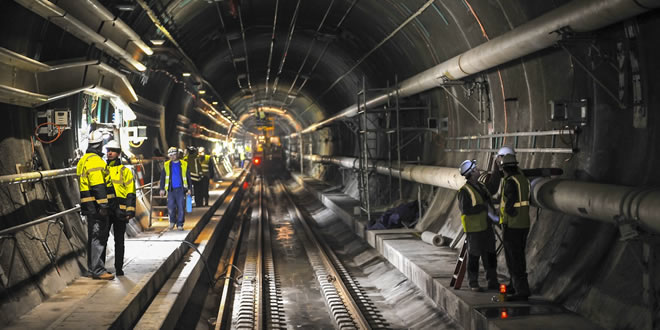

Impossible Engineering
The Discovery Channel featured impossible train engineering mostly done in the late 1800 and early 1900. Truly man has the dominion over the earth as mandated in Genesis 1:28. Engineers did almost the impossible in building trains to ease travel. The obstacles overcame were tall and unforgiving mountains and elevations, water (swamps rivers) lakes, oceans/seas. And the achievements were truly remarkable.
Some of those mentioned were:
1. Australian railway line that connected the minesites to Sydney. The steep mountain side were manually chipped away by crowbars (the bars were hammered one by one). In order to overcome the steep mountain side, the train reversed to lessen the gradient
2. Trains can only go up to maximum of 7% grade/incline. To go beyond this, as they did in UK they employed rack and pinion railway system. The train rollers were the pinion (toothed) and the rail were pinion. However some trains due to their weight fell on their sides. Solution, the rack were enclosed in cribs.
3. In Poland, to connect a city, there was train that was pulled by system of cables run by water turbines to go through waterways and inclines. It was an ingenious method and the rail system can pull loads up to 40 tons.
4. There was railway system that was built on swampland. However the rail bed continued to sink. The solution a drain for the swampland.
5. A train system in Switzerland employed a round about of 70 meters to change incline gradually across valleys up to the mountain
6. Most of train system in Italy and Switzerland employed tunneling manual (not the automatic boring system we see now.. In an Italian island the railway system connected the 12 villages and to build the rail, materials have to be delivered by helicopter.
7. An ingenious and constant watch over erosion and landslide has to be done. Monitors have to be established built, as well as strong slope protection: gabion etc to prevent the landslide from eating, destroying the railways
8. In Sierra Nevada, and elsewhere a deep snow machine was invented to prevent deep snow from turning into ice that stranded many passenters.
9. Some of the other spectacular rail were:
1. The one in Istanbul built underwater. Made of concrete tubes buried underwater beneath 60 meters of water and interlocked by steel and rubber gasket. A system of monitoring and flood control was installed to prevent flooding and catastrophe from earthquake.
2. The two km train system between India and Sri Lanka. It was built by a British Engineer. At the middle was a drawbridge that enabled ships to pass. The bridge used minimual counterweight (using the principle of rocking chair) and can be operated by hand
3. The bridge in UK that employed multi design to be robust and has run for more than 150 years: use suspension system, an arch,and vertical support. It was tall enough to enable Naval ships to pass through the channel.
Rizal Philippines
May 28, 2019
Impossible Engineering
The Discovery Channel featured impossible train engineering mostly done in the late 1800 and early 1900. Truly man has the dominion over the earth as mandated in Genesis 1:28. Engineers did almost the impossible in building trains to ease travel. The obstacles overcame were tall and unforgiving mountains and elevations, water (swamps rivers) lakes, oceans/seas. And the achievements were truly remarkable.
Some of those mentioned were:
1. Australian railway line that connected the minesites to Sydney. The steep mountain side were manually chipped away by crowbars (the bars were hammered one by one). In order to overcome the steep mountain side, the train reversed to lessen the gradient
2. Trains can only go up to maximum of 7% grade/incline. To go beyond this, as they did in UK they employed rack and pinion railway system. The train rollers were the pinion (toothed) and the rail were pinion. However some trains due to their weight fell on their sides. Solution, the rack were enclosed in cribs.
3. In Poland, to connect a city, there was train that was pulled by system of cables run by water turbines to go through waterways and inclines. It was an ingenious method and the rail system can pull loads up to 40 tons.
4. There was railway system that was built on swampland. However the rail bed continued to sink. The solution a drain for the swampland.
5. A train system in Switzerland employed a round about of 70 meters to change incline gradually across valleys up to the mountain
6. Most of train system in Italy and Switzerland employed tunneling manual (not the automatic boring system we see now.. In an Italian island the railway system connected the 12 villages and to build the rail, materials have to be delivered by helicopter.
7. An ingenious and constant watch over erosion and landslide has to be done. Monitors have to be established built, as well as strong slope protection: gabion etc to prevent the landslide from eating, destroying the railways
8. In Sierra Nevada, and elsewhere a deep snow machine was invented to prevent deep snow from turning into ice that stranded many passenters.
9. Some of the other spectacular rail were:
1. The one in Istanbul built underwater. Made of concrete tubes buried underwater beneath 60 meters of water and interlocked by steel and rubber gasket. A system of monitoring and flood control was installed to prevent flooding and catastrophe from earthquake.
2. The two km train system between India and Sri Lanka. It was built by a British Engineer. At the middle was a drawbridge that enabled ships to pass. The bridge used minimual counterweight (using the principle of rocking chair) and can be operated by hand
3. The bridge in UK that employed multi design to be robust and has run for more than 150 years: use suspension system, an arch,and vertical support. It was tall enough to enable Naval ships to pass through the channel.
Subscribe to:
Posts (Atom)